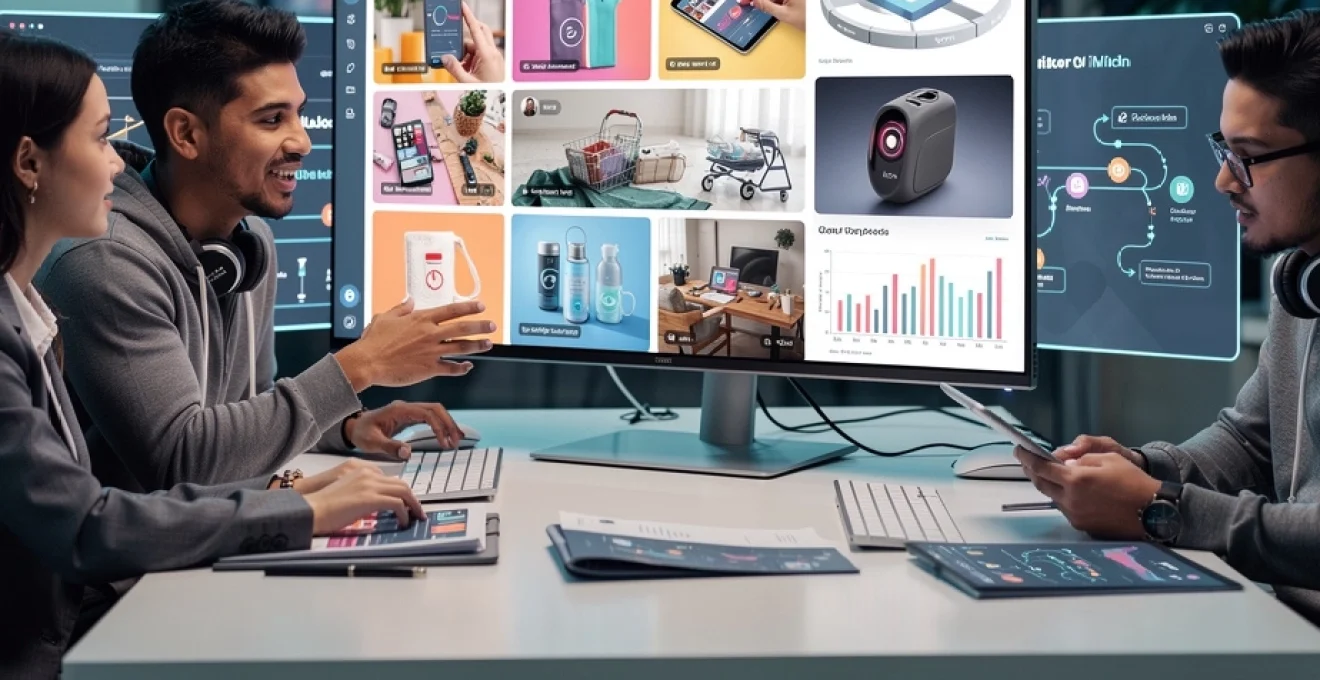
# The Power of Visual Content in Digital Marketing
Digital marketers face an unprecedented challenge in today’s crowded online landscape: capturing and retaining audience attention in an environment where the average person encounters thousands of marketing messages daily. Research consistently demonstrates that the human brain processes visual information 60,000 times faster than text, making visual content not merely an enhancement to marketing strategies but an essential component for survival in competitive digital ecosystems. From Instagram’s explosive growth to TikTok’s dominance among younger demographics, platforms built primarily around visual experiences continue to outperform text-heavy alternatives in engagement metrics, conversion rates, and brand recall measurements.
The shift toward visual-first marketing reflects fundamental changes in consumer behaviour and technological capabilities. Mobile device usage now accounts for over 58% of global web traffic, with users scrolling through content at unprecedented speeds—often making split-second decisions about whether to engage based solely on visual appeal. Brands that successfully leverage high-quality imagery, compelling video content, interactive infographics, and immersive visual experiences consistently outperform competitors who rely predominantly on written communication. This transformation has created new opportunities for businesses willing to invest in sophisticated visual content strategies that align with platform-specific requirements and audience expectations.
Visual content formats that drive conversion rate optimisation
Understanding which visual formats generate the highest return on investment requires careful analysis of platform-specific performance metrics and audience behaviour patterns. Contemporary conversion rate optimisation increasingly depends on selecting appropriate visual formats that align with user intent at different stages of the customer journey. While traditional static images maintain relevance for certain applications, emerging formats offer superior engagement potential and conversion capabilities when deployed strategically.
Shoppable instagram posts and pinterest product pins
Social commerce has fundamentally transformed how consumers discover and purchase products online. Shoppable posts on Instagram allow users to tap product tags within images and videos, accessing detailed information and purchasing options without leaving the platform. This seamless integration reduces friction in the buying process, with brands reporting conversion rate improvements of 20-30% compared to standard posts directing users to external websites. Pinterest Product Pins function similarly, automatically syncing pricing and availability information while enabling direct purchases through the platform’s shopping features.
The visual nature of these platforms makes them particularly effective for lifestyle brands, fashion retailers, home décor businesses, and food-related companies. High-quality product photography shot in aspirational contexts generates significantly higher engagement than catalogue-style images. Successful shoppable content typically features products integrated naturally into lifestyle scenarios, allowing potential customers to visualise items in real-world applications. Brands achieving optimal results invest in professional photography that maintains consistent aesthetic standards while showcasing products from multiple angles with appropriate lighting and composition.
Interactive infographics using visme and piktochart
Static infographics have proven their value in content marketing for years, but interactive versions dramatically increase engagement duration and information retention. Platforms like Visme and Piktochart enable marketers to create sophisticated interactive infographics featuring clickable elements, animated data visualisations, and embedded multimedia content. These tools democratise advanced design capabilities, allowing marketing teams without extensive graphic design experience to produce professional-quality visual content that communicates complex information effectively.
Interactive infographics excel at presenting data-heavy content in digestible formats, making them particularly valuable for B2B marketing, educational content, and thought leadership initiatives. Users spend an average of 2.5 times longer engaging with interactive infographics compared to static versions, and the information retention rate increases by approximately 40%. When designing interactive infographics, prioritise clarity over complexity—each interactive element should serve a clear purpose in advancing user understanding rather than simply adding visual novelty.
Cinemagraphs and Micro-Video content for landing pages
Cinemagraphs—still photographs containing minor, repeated movements—occupy a unique space between static images and full video content. These subtle animations capture attention more effectively than static imagery while maintaining the loading speed advantages that full videos sacrifice. Landing pages incorporating cinemagraphs demonstrate 60% higher engagement rates and 35% improved conversion metrics compared to pages using exclusively static imagery. The format works particularly well for luxury brands, hospitality businesses, and product pages where creating atmosphere and emotional connection drives purchasing decisions.
Micro-video content, typically ranging from 6 to 15 seconds in duration, serves similar purposes while offering greater creative flexibility. These brief videos auto
play automatically on many platforms, making them ideal for drawing the eye to key calls to action on landing pages, pricing pages, and lead generation forms. Micro-videos work best when they communicate a single, focused message—such as demonstrating a core product feature, showing a quick before-and-after transformation, or highlighting a time-limited offer. To maximise conversion rate optimisation, ensure that the first three seconds deliver the primary value proposition and that captions or on-screen text convey the message even when audio is muted.
When implementing cinemagraphs and micro-video content, file size optimisation is critical for maintaining fast page load times and protecting your Core Web Vitals scores. Use modern formats like WebM or MP4 with efficient compression, and A/B test different visual variations to identify which specific movements or sequences most effectively draw users toward your primary CTA. You should also align the visual style of these assets with your broader brand guidelines—colour grading, typography overlays, and motion style should feel consistent across ads, landing pages, and social creatives to avoid cognitive dissonance in the user journey.
360-degree product photography and WebGL renderings
As online shoppers become more sophisticated, expectations for product visualisation in ecommerce experiences have risen sharply. 360-degree product photography allows users to rotate items, zoom in on details, and assess quality in a way that closely approximates in-store examination. Brands implementing 360-degree viewers on product pages often report conversion lifts of 10-30% and reduced product return rates, as customers feel more confident that what they see accurately represents what they will receive. This format is especially effective for high-consideration purchases such as electronics, furniture, fashion, and automotive accessories.
Beyond traditional photography, WebGL-based 3D renderings provide interactive experiences that can outperform standard imagery in both engagement and perceived product quality. WebGL renderings enable configurators where users can change colours, materials, and components in real time, creating a personalised preview of the final product. These experiences not only increase time on page but also generate richer first-party behavioural data that can inform remarketing campaigns and product development. When deploying 3D and 360-degree assets, ensure they are progressively enhanced for devices and connections that can support them while providing static fallbacks for older hardware and slower networks.
Data visualisation techniques for content marketing ROI
Producing compelling visual content is only half of an effective digital marketing strategy; the other half involves measuring performance and clearly communicating results to stakeholders. Data visualisation transforms raw analytics into intuitive, actionable insights that help you refine campaigns and justify budget allocation. Instead of wading through dense spreadsheets, marketers can use dashboards and visual reports to identify trends, spot anomalies, and communicate the true ROI of visual content marketing to leadership teams. When done well, visual analytics becomes a strategic asset rather than a reporting obligation.
Google data studio dashboards for visual reporting
Google Data Studio (now Looker Studio) has become a standard tool for visual reporting in content marketing due to its flexibility and native integration with Google Analytics, Search Console, YouTube, and Google Ads. By building custom dashboards, you can track how specific visual content—such as videos, infographics, and interactive tools—contributes to traffic growth, engagement metrics, and conversion events. For example, you might create a report that segments landing pages by those containing embedded video versus static images and compares average session duration, bounce rate, and goal completion rate.
Effective Data Studio dashboards focus on clarity and narrative, not just aesthetics. Group widgets around key questions: Which visual formats generate the most qualified leads? Which social platforms drive the highest-converting traffic? Which videos contribute most to assisted conversions? Use time-series graphs to illustrate performance trends, scorecards to surface KPIs at a glance, and filter controls so stakeholders can drill down by channel, campaign, or content type. Treat your visual reporting as a living product, iterating layouts and metrics as your content marketing strategy evolves.
Heat mapping with hotjar and crazy egg analytics
While traditional analytics tools reveal what users do, heat mapping platforms like Hotjar and Crazy Egg show you where they focus attention on a page. Scroll maps indicate how far visitors typically travel down long-form content, while click and move maps highlight which visual elements attract interaction—and which get ignored. For visual content in digital marketing, these tools are invaluable; they reveal, for instance, whether users are interacting with an infographic, watching a hero video, or noticing your primary call-to-action button.
Heat mapping is particularly useful for conversion rate optimisation on landing pages and product detail pages rich in imagery and video. If users consistently click non-clickable visual elements, you may need to adjust affordances or make those assets interactive. If they stop scrolling just before a crucial testimonial video or pricing chart, you might reposition that content higher. Think of heat maps as an MRI scan of your page layout: they reveal underlying issues that might not be visible in aggregate metrics alone, enabling precise, visual-driven improvements.
A/B testing visual elements through optimizely
A/B testing platforms such as Optimizely allow marketers to run controlled experiments on visual elements and determine, with statistical confidence, which variants improve performance. You can test everything from hero images and button colours to thumbnail styles, banner designs, and video placements. For example, swapping a generic stock photo for a product close-up or user-generated image may significantly increase click-through rates and downstream conversions, even if the underlying copy remains unchanged.
To get meaningful results from A/B tests on visual content, define a single primary metric—such as sign-ups, add-to-cart events, or content downloads—and ensure each variation differs in one major visual aspect at a time. Overloading a test with multiple visual changes makes it difficult to attribute performance shifts to specific factors. We also recommend running tests long enough to capture variability across weekdays and traffic sources and using Optimizely’s audience targeting features to segment results by device type or traffic channel. Over time, these iterative visual experiments compound into substantial gains in content marketing ROI.
Eye-tracking studies and f-pattern layout design
Eye-tracking research has consistently shown that users scanning web pages often follow predictable viewing patterns, such as the F-pattern for text-heavy layouts and the Z-pattern for more visual, conversion-focused pages. Understanding these patterns helps you place critical visual content—logos, product images, trust badges, and calls to action—where users are most likely to see them without conscious effort. Eye-tracking studies, whether conducted in labs or via remote tools that approximate gaze behaviour, provide empirical evidence about which design choices support or hinder your goals.
Applying F-pattern and Z-pattern principles does not mean every page must look identical, but it does encourage you to think about visual hierarchy and flow. For example, leading with a strong hero image and headline in the top-left, supporting visuals and social proof along the scanning path, and a contrasting CTA button at key fixation points can significantly improve engagement. You can think of these patterns as the “grammar” of visual layout: follow them thoughtfully, and your content becomes easier to read, navigate, and act upon, ultimately enhancing conversion rate optimisation.
Video marketing platforms and distribution strategies
Video content now accounts for more than 80% of consumer internet traffic, making it the cornerstone of many digital marketing strategies. However, simply producing a video is not enough; success depends on how effectively you optimise and distribute that content across different platforms. Each channel—from YouTube and TikTok to LinkedIn and your own website—has its own algorithmic preferences, audience behaviours, and technical requirements. A strategic approach to video distribution ensures that your assets work harder, reach the right viewers, and reliably support your marketing funnel.
Youtube SEO optimisation with TubeBuddy and VidIQ
YouTube functions as both a video platform and the world’s second-largest search engine, so search optimisation is essential for discoverability. Tools like TubeBuddy and VidIQ provide keyword research, tag suggestions, and competitive analysis tailored to YouTube SEO. By identifying long-tail keywords such as “how to use visual content in digital marketing” or “best visual content strategy for small businesses,” you can craft titles, descriptions, and tags that align with real user queries, increasing your chances of appearing in search results and recommended video feeds.
Beyond metadata, YouTube’s algorithm heavily weights watch time, audience retention, and engagement signals such as likes, comments, and shares. Structuring your videos with a compelling hook in the first 5-10 seconds, clear chapter markers, and strong visual storytelling can significantly boost these metrics. Custom thumbnails featuring bold imagery and legible text overlays often outperform auto-generated frames, particularly when they visually reinforce the main keyword. Using TubeBuddy or VidIQ’s A/B testing features for thumbnails and titles allows you to fine-tune your creative choices and maximise organic reach over time.
Tiktok algorithm exploitation for brand awareness
TikTok’s algorithm prioritises content relevance and viewer behaviour over follower counts, giving brands a unique opportunity to achieve outsized reach with relatively modest budgets. The platform favours videos that capture attention within the first second, generate high completion rates, and prompt users to interact through comments, shares, and remixes. To leverage TikTok for brand awareness, focus on short-form, vertical videos that feel native to the platform: lo-fi production, authentic storytelling, and trend-aligned visuals often outperform polished TV-style ads.
Success on TikTok also depends on understanding and participating in evolving trends—sounds, challenges, editing styles, and visual memes that cycle rapidly through the platform. Ask yourself: how can we translate our brand message into the language of TikTok without losing authenticity? Experiment with behind-the-scenes clips, quick how-tos, visual transformations, and user-generated content integrations. Consistent posting, smart use of on-screen text and captions, and collaboration with creators who already understand the algorithm’s nuances can accelerate your brand’s learning curve and visibility.
Wistia and vimeo for embedded video analytics
While YouTube and TikTok excel at discovery, platforms like Wistia and Vimeo are often better suited for on-site video hosting and detailed engagement analytics. These tools provide granular data such as play rate, average engagement, heat maps of where viewers drop off, and individual viewer tracking linked to email addresses in some marketing stacks. For businesses focused on B2B lead generation or high-value ecommerce, these insights are invaluable for understanding how video content contributes to pipeline and revenue.
Embedding Wistia or Vimeo videos on landing pages, product pages, and blog posts allows you to maintain control over branding, eliminate competitor recommendations, and integrate analytics with marketing automation platforms. You can, for instance, trigger follow-up emails when a prospect watches more than 75% of a product demo or segment audiences based on which video topics they engage with most. Think of these platforms as microscopes for your video marketing: they reveal which visual narratives truly move prospects closer to conversion and which need refinement.
Linkedin native video versus external hosting performance
On LinkedIn, native video—uploaded directly to the platform—typically outperforms externally hosted videos shared as links in terms of reach, autoplay behaviour, and engagement. LinkedIn’s algorithm prioritises content that keeps users on-site, so embedding a YouTube or Vimeo link often results in reduced visibility. Native videos also benefit from larger, more prominent previews in the feed, which can significantly increase play rates among busy professionals scrolling quickly on mobile devices.
That said, external hosting still has a role in a holistic video strategy. You might publish a full-length webinar on your website through Wistia, then repurpose key clips as native LinkedIn videos that tease the most valuable insights and drive traffic to the complete version. When deciding between native and external hosting, consider your primary objective: is it maximum reach and engagement within the LinkedIn ecosystem, or deeper analytics and conversion tracking on your own properties? Balancing both approaches allows you to capture attention where it originates while retaining control over high-intent interactions further down the funnel.
Brand identity consistency across visual touchpoints
As your organisation deploys visual content across websites, social media, email campaigns, display ads, and offline materials, maintaining a consistent brand identity becomes increasingly challenging—and increasingly important. Inconsistent colours, typography, illustration styles, or photography can confuse audiences and weaken brand recognition, especially in crowded markets. Consistency, on the other hand, functions like a visual signature: it helps users recognise your content instantly, reinforces trust, and creates a coherent brand narrative across every touchpoint.
Building this consistency starts with a robust visual style guide that documents logo usage, colour palettes, type systems, iconography, image treatments, and motion principles. Centralised asset libraries and templates in tools such as Canva, Figma, or Adobe Creative Cloud make it easier for distributed teams and external partners to stay on-brand without constant oversight. You can think of your style guide as a musical score and your designers, marketers, and agencies as the orchestra—when everyone reads from the same sheet, the resulting experience feels harmonious rather than chaotic.
It is equally important to balance consistency with platform-specific adaptation. The way your brand appears in a LinkedIn thought leadership carousel should not be identical to a playful TikTok video, yet both must feel unmistakably “you.” Establish core visual elements—logo placement rules, colour anchors, and tone of imagery—that remain constant, while allowing flexibility in composition, pacing, and content themes. Regular brand audits, where you review visual assets across channels and campaigns, help identify drift and ensure that every piece of visual content supports the same overarching identity and positioning.
Accessibility standards for visual content compliance
As visual content becomes more sophisticated, ensuring accessibility is both a legal obligation and an ethical imperative. Standards such as the Web Content Accessibility Guidelines (WCAG) provide clear criteria for making visual experiences usable for people with disabilities, including those with visual impairments, colour blindness, and cognitive challenges. Accessible visual content not only expands your potential audience but also improves usability for everyone—for instance, high-contrast text and clear iconography benefit users in bright outdoor environments as much as those with low vision.
Practical accessibility measures include providing descriptive alt text for images, ensuring sufficient colour contrast between text and backgrounds, and avoiding reliance on colour alone to convey meaning in charts or infographics. Captions and transcripts for video content support users who are deaf or hard of hearing and also cater to the growing number of viewers who consume video with sound off in public spaces. When designing interactive visuals or data visualisations, consider keyboard navigation, focus states, and screen reader compatibility so that all users can access key information and actions.
Integrating accessibility into your visual content workflow from the outset is far more efficient than retrofitting compliance later. Include accessibility checks in design reviews, content QA processes, and development sprints, and train your creative teams on best practices so they become second nature. You can think of accessibility like responsive design a decade ago: once treated as optional, it is now a baseline expectation in modern digital marketing. Brands that take accessibility seriously not only reduce legal risk but also demonstrate inclusivity, empathy, and long-term thinking in how they communicate.
Emerging visual technologies in digital marketing ecosystems
The visual marketing landscape continues to evolve as new technologies move from experimental to mainstream adoption. Augmented reality (AR) try-on experiences, virtual showrooms, and interactive 3D configurators are reshaping how consumers evaluate products online, particularly in sectors like beauty, fashion, home furnishings, and automotive. These immersive formats reduce uncertainty and bridge the gap between online and offline shopping, often leading to higher conversion rates and lower return volumes. For instance, AR-powered “see it in your space” tools allow customers to visualise furniture in their homes before purchasing, increasing confidence in size, colour, and style choices.
Artificial intelligence is also expanding what is possible in visual content creation and optimisation. AI-driven design tools can generate layout variations, suggest on-brand colour schemes, automatically crop images for different aspect ratios, and even create synthetic models or environments to showcase products. On the analytics side, computer vision algorithms can classify visual elements within your content and correlate them with performance metrics, helping you answer questions like: do images with people convert better than product-only shots? Does a certain colour palette drive more engagement on mobile? In this way, AI becomes both a creative collaborator and a data analyst for your visual strategy.
Looking ahead, we can expect further convergence between visual technologies and broader marketing ecosystems. Real-time 3D engines, WebXR experiences, and personalised video at scale will increasingly integrate with CRM systems, CDPs, and marketing automation platforms to deliver context-aware, highly tailored visual experiences. The key for marketers is not to chase every new shiny object but to evaluate emerging tools through the lens of customer value and measurable impact. When a new visual technology helps users understand, experience, or trust your offering more quickly and clearly, it is likely worth exploring as part of your next-generation digital marketing strategy.