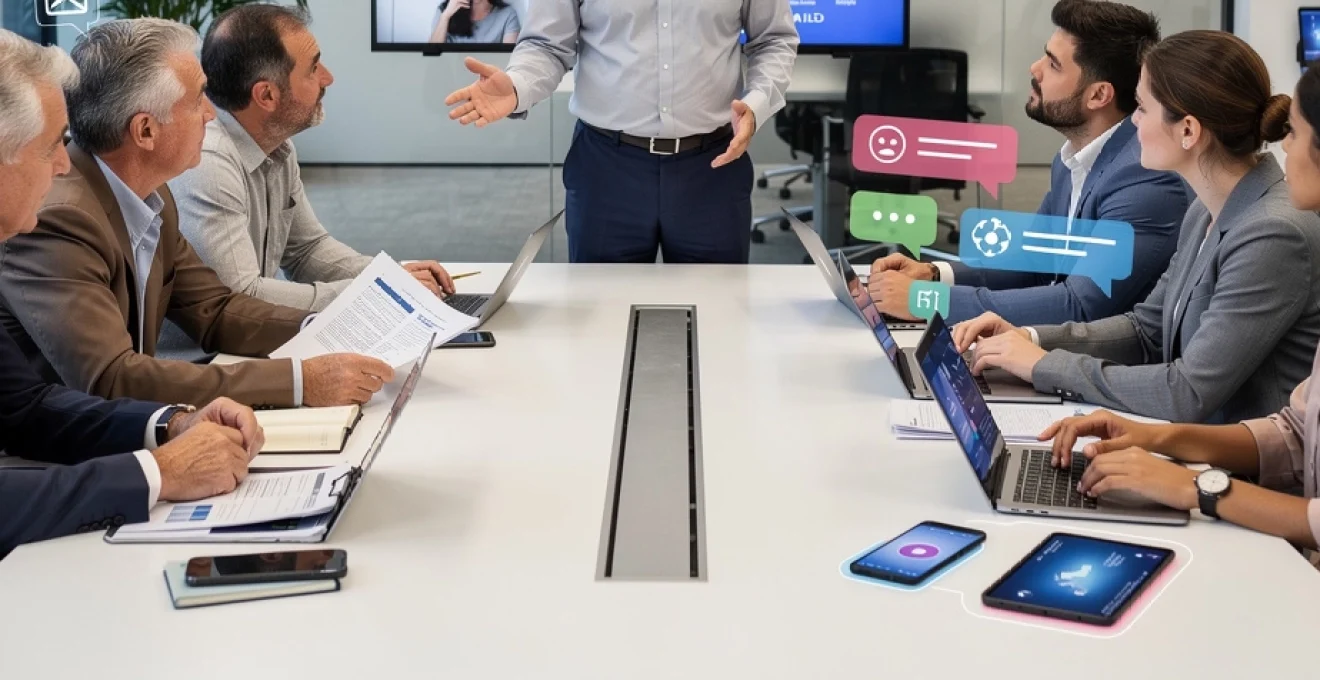
Today’s workplaces are witnessing an unprecedented phenomenon: for the first time in history, up to five distinct generations work side by side, each bringing profoundly different expectations, communication styles, and workplace values. This demographic convergence creates both remarkable opportunities and significant management complexities. While a 68-year-old Traditionalist may prefer telephone conversations and hierarchical decision-making, their 24-year-old Generation Z colleague expects instant Slack responses and collaborative, flat organisational structures. The friction between these divergent approaches can undermine productivity, create cultural tensions, and challenge even the most experienced leaders. Yet when managed effectively, these generational differences transform into competitive advantages, fostering innovation through diverse perspectives and creating resilient teams capable of navigating rapid market changes. Understanding the nuances of each generation’s workplace DNA has become essential for organisational success in 2024 and beyond.
Decoding generational cohort characteristics: traditionalists to gen Z in the workplace
Navigating the complexities of multigenerational teams begins with understanding the foundational experiences that shaped each cohort’s professional expectations. These generational characteristics aren’t rigid stereotypes but rather patterns influenced by shared historical, technological, and economic contexts. Recognising these patterns enables you to anticipate potential friction points whilst identifying complementary strengths that can elevate team performance.
The workplace landscape now spans nearly seven decades of birth years, from Traditionalists born before 1945 to Generation Alpha just entering university. Each generation’s formative years created distinct workplace values: Traditionalists witnessed post-war reconstruction and developed unwavering loyalty to institutions; Baby Boomers experienced unprecedented economic growth and competitive career advancement; Generation X grew up as “latchkey kids” fostering independence; Millennials came of age during the dot-com boom and subsequent economic crises; whilst Generation Z has never known a world without smartphones and social media. These divergent experiences translate directly into conflicting workplace expectations that require careful navigation.
Traditionalist and baby boomer work ethics: hierarchical structures and loyalty paradigms
Traditionalists, now largely in retirement but occasionally holding advisory or board positions, established workplace norms that persisted for decades. Their professional worldview emphasises respect for authority, formal communication protocols, and long-term organisational commitment. They expect clear chains of command and find matrix reporting structures unnecessarily complicated. When Traditionalists remain in your organisation, they often struggle with casual workplace cultures where junior employees address executives by first names or challenge decisions openly in meetings.
Baby Boomers, currently occupying many senior leadership positions, similarly value hierarchical structures but with greater willingness to question authority than their predecessors. This generation revolutionised workplace dynamics by introducing competitive individualism and performance-based advancement. They’re often characterised by exceptional work ethic and willingness to sacrifice personal time for career progression. However, Baby Boomers frequently clash with younger colleagues over flexibility expectations, viewing requests for remote work or condensed schedules as lacking commitment. Their preferred communication method—email—can frustrate younger team members who expect instant messaging responses. According to recent workplace studies, 63% of Baby Boomers check email multiple times daily but rarely use workplace chat applications, creating information silos that impede collaboration.
Generation X pragmatism: bridging analogue and digital work environments
Generation X occupies a unique transitional position, having experienced both pre-digital and digital workplace environments. This cohort developed adaptability as a core competency, witnessing rapid technological evolution from typewriters to cloud computing during their careers. Unlike Baby Boomers who may resist technological change, Generation X typically embraces new tools whilst maintaining appreciation for traditional business practices. They value work-life balance more than previous generations, though less vociferously than Millennials, and prefer results-oriented management over presenteeism.
This generation’s scepticism—earned through witnessing corporate downsizing, pension failures, and economic instability—makes them pragmatic and self-reliant. Generation X employees often excel at independent problem-solving but may resist excessive collaboration that seems inefficient. They appreciate straightforward, concise communication and become frustrated with lengthy meetings or verbose emails. When managing Generation X team members, you’ll find they respond well to autonomy and flexibility but expect clear objectives and accountability measures. Their bridging position between analogue and digital natives makes them inval
inable translators between older colleagues who favour established processes and younger employees pushing for digital-first workflows. When you intentionally position Generation X as integrators—inviting them to chair cross-generational project teams or lead technology rollouts—they can de-escalate tensions and ensure that both innovation and operational stability are preserved. Overlooking this bridging role is a missed opportunity in managing multigenerational teams.
Millennial collaboration preferences: flat organisational models and purpose-driven engagement
Millennials, now the largest generational cohort in many organisations, are often the driving force behind calls for flat organisational structures and more inclusive decision-making. Their formative years were shaped by the rise of social media, open-source movements, and collaborative platforms, which normalised horizontal information sharing. As a result, they place high value on open dialogue, cross-functional teamwork, and leaders who are accessible rather than distant authority figures. When they encounter rigid hierarchies, slow decision-making, or opaque communication, disengagement and turnover risk increase sharply.
This generation is also distinctly purpose-driven. Competitive salaries matter, but Millennials frequently evaluate employers based on social impact, environmental responsibility, and alignment with personal values. They are drawn to organisations that articulate a clear mission and demonstrate integrity through concrete actions, not just marketing slogans. If you want to harness Millennial energy, connect day-to-day tasks to broader organisational goals, and show how their contributions move the needle. Transparent communication about strategy, progress, and setbacks helps maintain trust and motivation.
From a management perspective, Millennials respond strongly to continuous feedback and developmental opportunities. They grew up in an era of real-time metrics and notifications, so waiting twelve months for a formal appraisal feels archaic. They are more likely to stay in a role if they see visible pathways for skill development, lateral movement, and advancement. When managing multigenerational teams, positioning Millennials as project leads, scrum masters, or innovation champions can leverage their natural inclination toward collaboration, provided expectations are clearly defined to avoid friction with colleagues who prefer more traditional chains of command.
Generation Z digital natives: real-time feedback expectations and technology integration
Generation Z, now rapidly entering the workforce, is the first cohort of true digital natives. They have never known a world without smartphones, high-speed internet, and on-demand information, which shapes both how they work and how they expect to be managed. Gen Z employees are comfortable switching between multiple apps and devices, prefer bite-sized information, and often expect workplace technology to match the usability of consumer tools they use daily. When systems are clunky or processes heavily paper-based, they can quickly become frustrated and question organisational effectiveness.
This generation places a premium on real-time feedback and transparency. Much like checking social media engagement, they prefer clear, frequent signals about performance and expectations. Short weekly one-to-ones, quick Slack or Teams check-ins, and visible dashboards can be more effective than lengthy quarterly reviews. At the same time, they value psychological safety and are more vocal about wellbeing, diversity, and ethical conduct. If they perceive inconsistency between stated values and lived reality, they will not hesitate to seek opportunities elsewhere.
When integrating Gen Z into multigenerational teams, you can transform potential friction into innovation by proactively involving them in technology selection, user testing, and process optimisation. Think of them as in-house “UX advisors” for your workflows. Pairing Gen Z employees with experienced colleagues in reverse mentoring arrangements can simultaneously boost digital literacy across the organisation and help younger staff appreciate historical context and strategic nuance. This deliberate exchange prevents generational divides becoming entrenched and keeps your organisation adaptive.
Communication protocol conflicts across age demographics
Even when everyone in a team shares the same organisational goals, communication preferences can derail collaboration. Different generations often have entrenched habits around when, how, and with what level of formality they communicate. For leaders managing multigenerational teams, these differences can feel like trying to run one meeting in five languages at once. Without explicit norms, misunderstandings multiply, response-time expectations clash, and critical information either gets lost in overflowing inboxes or buried in chat threads.
Addressing communication protocol conflicts is not about declaring one method “right” and another “wrong”. Instead, it requires designing communication agreements that respect generational preferences while ensuring that business priorities are met. When you make these norms visible—how quickly to reply, which channels to use for what, how decisions are documented—you reduce friction and free up cognitive capacity for actual problem-solving rather than guessing games. The sections below dissect the most common friction points and provide practical strategies to align communication in age-diverse teams.
Asynchronous versus synchronous modalities: email, slack, and face-to-face preferences
One of the most visible divides in multigenerational teams concerns asynchronous tools (like email or project management platforms) versus synchronous interactions (such as live meetings, phone calls, or instant messaging). Traditionalists and many Baby Boomers often lean toward scheduled conversations and well-structured emails, seeing them as professional and reliable. Millennials and Gen Z, by contrast, tend to favour real-time messaging through Slack, Microsoft Teams, or WhatsApp, viewing email as slow and cumbersome. Generation X usually straddles both worlds, using whatever is most efficient for the task at hand.
If left unmanaged, these divergent preferences create information silos and missed expectations. A Boomer leader might draft a detailed email expecting responses over the next 24 hours, while Gen Z team members are exchanging decisions in a Slack channel that never reaches their manager’s radar. To avoid this, establish a channel architecture: define which platforms are used for urgent updates, project work, informal collaboration, and confidential matters. For example, you might decide that all critical decisions are summarised in email or in your project management tool, while brainstorming and quick questions live in chat.
It also helps to set explicit expectations for response times per channel. Clarify that instant messaging is not synonymous with “always on”, and that not every email warrants an immediate reply. You might feel this level of structure is overkill, but consider it like road signage: once installed, it dramatically reduces collisions. Encourage teams to revisit these norms quarterly, especially as new tools are adopted or as team composition changes. This proactive housekeeping keeps communication aligned with both generational needs and organisational realities.
Feedback delivery mechanisms: annual reviews versus continuous performance conversations
Generations differ sharply in how they view performance management. Traditionalists and many Baby Boomers came of age in systems that relied heavily on annual performance reviews, where formal appraisals, ratings, and promotion decisions happened once a year. These structured reviews still provide valuable documentation and a sense of ritual. However, Generation X, Millennials, and Gen Z increasingly expect continuous performance conversations—short, frequent check-ins that focus on coaching, priorities, and development rather than retrospective judgement.
Relying solely on annual reviews in a multigenerational team creates two problems. First, younger employees may feel adrift for months at a time, unsure whether they are meeting expectations. Second, older employees may feel overwhelmed if feedback becomes a constant stream without clear boundaries. The solution lies in combining cadence and depth: maintain a formal review cycle to satisfy governance requirements and long-term planning, but complement it with lighter, regular touchpoints. For example, many high-performing teams now use monthly one-to-ones focused on goals, blockers, and career development.
When shifting toward continuous feedback, be explicit about its intent. This is not about micromanagement; it is about creating a shared dashboard for performance and wellbeing. Equip managers with simple frameworks—such as “start, stop, continue” or short coaching questions—to keep conversations structured and efficient. You might ask yourself: if your team only had fifteen minutes a fortnight for performance conversations, what would you prioritise? Designing around that constraint often surfaces the most impactful practices and minimises generational resistance.
Cross-generational meeting facilitation: zoom fatigue and hybrid participation challenges
The rise of hybrid and remote work has pushed meeting culture to the forefront of multigenerational management challenges. Older generations may be more comfortable with long, in-person meetings, seeing them as key moments for relationship-building and decision-making. Younger employees, particularly Millennials and Gen Z, are more likely to experience Zoom fatigue and question the value of meetings that could have been an email or a shared document. When teams span time zones and life stages, one-size-fits-all scheduling quickly becomes untenable.
Effective cross-generational meeting facilitation starts with ruthless clarity: why are you meeting, and what outcomes are required? Use asynchronous collaboration—shared agendas, pre-read documents, and comment threads—to reduce time spent on information sharing, so live sessions focus on discussion and decisions. Consider rotating meeting times to distribute inconvenience fairly, especially for global teams, and record key sessions for those who cannot attend. Hybrid meetings require special care: ensure that remote participants are not relegated to “second-class citizens” by investing in good audio-visual setups and explicitly inviting their input.
To balance preferences, experiment with shorter, more frequent check-ins rather than marathon sessions. For example, a 25-minute stand-up with a clear agenda often engages Generation Z and Millennials more effectively than a two-hour status meeting. At the same time, build in occasional longer, in-person or virtual workshops for strategic discussions where Baby Boomers and Traditionalists can leverage their strengths in relationship-building and nuanced debate. Think of your meeting cadence like a fitness programme: a mix of sprints and endurance sessions will keep the whole team in shape.
Language and tone disparities: formality expectations in professional correspondence
Another subtle yet potent source of friction in multigenerational teams is the degree of formality expected in written and verbal communication. Traditionalists and many Baby Boomers were trained in highly formal business correspondence—complete salutations, structured paragraphs, and meticulous proofreading. Emojis, GIFs, and abbreviations can feel jarringly unprofessional to them. Millennials and Gen Z, by contrast, are accustomed to blending personal and professional tones, using casual language and visual cues to build rapport and convey nuance quickly.
Left unaddressed, these differences can lead to misinterpretations of intent. A terse, concise email from a Gen X manager may be read as annoyed or disengaged by a younger employee expecting more warmth. Meanwhile, a Boomer executive might perceive a chat message filled with emojis as lacking seriousness, even if the underlying work is exemplary. The key is to codify tone expectations for different contexts. For instance, you might encourage more formal language in external communications and long-form reports, while allowing a more relaxed tone in internal chat channels and informal updates.
Providing simple examples of “fit-for-purpose” communication styles can be surprisingly powerful. Short internal guides illustrating acceptable email openings, sign-offs, and the situational use of emojis demystify expectations without policing personality. You can also use inclusive language training to raise awareness of generational slang—terms like “OK boomer” or “snowflake” should be explicitly off-limits, just as you would prohibit other discriminatory remarks. By framing tone as a tool for clarity and respect, rather than a generational battleground, you create space for authentic expression within professional boundaries.
Technology adoption gaps and digital literacy discrepancies
Technology is often the flashpoint where generational differences become most visible. While age does not determine digital skill, patterns do emerge: younger employees have typically grown up with new tools, whereas older colleagues have had to adapt to them mid-career. This difference in starting point can translate into varying levels of confidence, speed, and willingness to experiment. When organisations roll out new platforms without accounting for these discrepancies, productivity dips and resentment can build on all sides.
Managing multigenerational teams in a digital-first era means designing technology adoption strategies that are inclusive by default. That involves more than scheduling a single training session and hoping for the best. It requires multi-modal learning resources, peer support structures, and explicit recognition that asking for help is a sign of professionalism, not incompetence. If you treat digital literacy like any other core competency—developed over time, with tailored support—you unlock more of your workforce’s potential and reduce the risk of creating a two-speed organisation.
Cloud-based collaboration tools: microsoft teams and notion onboarding barriers
Cloud-based collaboration platforms such as Microsoft Teams, Google Workspace, Asana, and Notion have become the backbone of knowledge work. Yet for employees accustomed to local file storage, email attachments, and in-person updates, these tools can feel like a maze. Baby Boomers and some Traditionalists may find the constant stream of notifications overwhelming, while Gen Z employees can quickly adapt but may not fully understand information governance or version control. The result is often inconsistent usage, with critical documents scattered across drives, inboxes, and chat threads.
To close this gap, treat onboarding to collaboration tools as a change management project, not a technical footnote. Start by clearly articulating the “why”: explain how a centralised workspace reduces duplication, supports hybrid work, and makes knowledge accessible across time zones and generations. Provide layered learning options—live demos for those who learn by asking questions, short video tutorials for visual learners, and step-by-step written guides for those who prefer to read. Crucially, schedule follow-up clinics or “office hours” to address real-world questions once people start using the tools.
Peer champions can accelerate adoption across age groups. Consider creating a network of “digital ambassadors” from different generations who can model best practices and offer informal support. When a respected Boomer leader is seen confidently using Teams channels or Notion databases, sceptical peers are far more likely to follow. Conversely, inviting Gen Z employees to co-facilitate training sessions gives them a chance to showcase their strengths while building cross-generational trust. Over time, these small interactions normalise collaborative technology and reduce the stigma around learning curves.
Cybersecurity awareness variations: phishing recognition and password management practices
Cybersecurity is an area where assumptions about age can be particularly dangerous. While older employees are sometimes stereotyped as less tech-savvy, recent studies show that younger digital natives may actually be more prone to risky behaviours, such as password reuse or clicking on unfamiliar links, because they are so habituated to constant digital interactions. In a multigenerational workforce, everyone is a potential vulnerability—and a potential asset—in defending against phishing, social engineering, and data breaches.
Effective cybersecurity training must therefore be tailored yet universal. Rather than delivering dense, jargon-heavy presentations once a year, design short, scenario-based modules that mirror real threats employees might encounter in email, messaging apps, or social media. Show what modern phishing emails look like, including those that mimic internal communications or well-known brands, and explain the simple steps to verify authenticity. Reinforce good habits—such as using password managers and multi-factor authentication—through regular nudges and visible leadership buy-in.
To bridge generational gaps, frame cybersecurity as a shared organisational responsibility, not an intelligence test. Encourage cross-generational pairing during simulations or drills, where employees can discuss how they would respond to suspicious requests. This not only builds awareness but also reduces the shame that can prevent people from reporting potential mistakes quickly. Ask yourself: would your team feel comfortable admitting they clicked on a dubious link, or would they try to hide it? The answer often reveals more about your culture than your technical controls.
Artificial intelligence integration: ChatGPT and automation resistance patterns
The rapid rise of artificial intelligence tools—such as ChatGPT, Copilot, and automation platforms—has introduced a new layer of complexity in managing multigenerational teams. Younger employees may be enthusiastic early adopters, experimenting with AI for drafting emails, summarising documents, or generating ideas. Some older colleagues, having lived through previous waves of automation anxiety, may be more cautious or sceptical, worrying about job displacement or quality control. These contrasting reactions can slow adoption and create invisible fault lines in workflows.
To harness AI effectively, organisations need to move beyond ad hoc experimentation and establish clear guardrails and use cases. Start by identifying repetitive, low-value tasks where AI can reliably assist—such as formatting reports, basic data analysis, or drafting first-pass content for human review. Provide training that demystifies how these tools work, what they can and cannot do, and how to maintain confidentiality and ethical standards. Position AI as an augmentation layer, freeing up time for higher-value work, rather than as a replacement for human judgement.
Crucially, involve representatives from all generations in designing AI governance. Invite sceptics into pilot projects and listen carefully to their concerns; they often surface legitimate risks around bias, compliance, or overreliance on automation. At the same time, empower enthusiastic adopters to share success stories and practical tips, ideally through short internal showcases. Over time, this balanced approach can turn AI from a source of generational tension into a shared productivity lever—much like the shift from paper memos to email decades ago.
Mobile-first workflows: BYOD policies and cross-device competency challenges
As smartphones and tablets become primary work devices for many employees, mobile-first workflows present both opportunities and pitfalls for age-diverse teams. Gen Z and younger Millennials often default to mobile for email, messaging, document review, and even content creation. Older generations may still prefer desktops or laptops for anything beyond quick checks, citing concerns about visibility, typing comfort, or security. Without clear policies, this divergence can lead to inconsistent user experiences, data leakage risks, and frustration over app compatibility.
Bring-your-own-device (BYOD) policies are particularly sensitive. While they can increase flexibility and reduce hardware costs, they also blur boundaries between personal and professional life and raise complex security questions. To manage this in a multigenerational context, define transparent rules about what data can be accessed on personal devices, require basic security measures (such as device encryption and screen locks), and provide alternative options—like company-issued devices—for those uncomfortable using their own hardware. Training should cover not just how to use mobile apps, but also when they are appropriate versus desktop tools.
To close cross-device competency gaps, offer practical, hands-on sessions where employees can experiment with mobile workflows in a low-stakes environment. Simple topics—such as annotating documents on a tablet, joining secure video calls from a phone, or managing notifications to avoid burnout—can significantly increase confidence. Think of it like teaching someone to drive a different type of car: the fundamentals are the same, but a guided introduction to new controls prevents accidents and builds trust. Over time, a thoughtful approach to mobile work helps every generation leverage flexibility without sacrificing security or performance.
Motivation and reward system misalignment
Beyond communication and technology, one of the most persistent challenges in managing multigenerational teams is aligning motivation and reward systems. What feels like a compelling incentive to one generation may leave another unmoved or even alienated. Traditionalists and Baby Boomers might value job security and formal recognition for tenure, while younger employees prioritise flexibility, learning opportunities, and rapid skill development. If your organisation relies on a single, one-size-fits-all rewards model, you risk disengaging large segments of your workforce.
Addressing this requires shifting from a purely standardised approach toward a more modular and personalised framework. Rather than asking, “What do employees want?” in the abstract, you can ask, “What mix of rewards would make sense for people at different life stages and career aspirations?” Think of your total rewards offering like a menu rather than a fixed-price meal—core elements remain consistent, but there is room for individual choice. In the sections that follow, we explore how compensation, career paths, and recognition can be tuned to bridge generational expectations.
Compensation structures: pension schemes versus student loan repayment assistance
Financial priorities vary significantly across age groups. Traditionalists and Baby Boomers, often in the later stages of their careers, are generally more focused on retirement readiness, healthcare, and preserving savings. Generation X may be juggling mortgages, childcare, and eldercare simultaneously, seeking stability and predictable income. Millennials and Gen Z, by contrast, are more likely to be burdened by student debt and rising living costs, valuing immediate financial relief and flexible benefits over long-term promises they may not fully trust.
In this context, traditional pension schemes and defined benefit plans, while still valuable, may not feel immediately relevant to younger employees. To enhance motivation across generations, organisations are increasingly experimenting with more flexible compensation structures. These might include student loan repayment assistance, optional salary-sacrifice schemes for additional pension contributions, or targeted savings programmes for goals like home deposits. Offering a cafeteria-style benefits plan, where employees can allocate a portion of their package toward the options that matter most to them, can significantly increase perceived value without necessarily increasing overall cost.
Transparency is crucial. Clearly explain the total value of compensation, including employer pension contributions, insurance, bonuses, and non-financial perks. Many younger employees underestimate the long-term impact of retirement benefits simply because they are abstract. Similarly, some older employees may not be aware of new offerings like financial coaching or student loan support that could benefit their children or dependants. By framing compensation as a holistic toolkit rather than a paycheque plus a few add-ons, you help each generation make informed choices aligned with their circumstances.
Career advancement trajectories: linear progression models versus lateral skill development
Traditional career models were largely linear: climb the ladder, secure promotions, and eventually reach a senior role. This paradigm still resonates strongly with many Traditionalists and Baby Boomers, who equate advancement with title changes, larger teams, and visible markers of authority. Generation X often values progression as well but may be more attuned to the risks of stagnation or redundancy, seeking roles that maintain their employability. Millennials and Gen Z, meanwhile, increasingly view their careers as a portfolio of experiences, emphasising lateral moves, skill diversification, and purposeful projects over rigid hierarchies.
If your organisation’s advancement framework still revolves solely around vertical promotions, you may inadvertently frustrate younger employees who crave growth but see limited upward opportunities, especially in flatter structures. One solution is to introduce dual career paths, where technical experts can advance in status and compensation without necessarily managing people, alongside options for project-based leadership roles. Job rotations, secondments, and cross-functional assignments can also offer meaningful development without requiring a formal promotion each time.
For multigenerational teams, clarity is again essential. Make career pathways visible through role profiles, competency frameworks, and internal mobility policies. Encourage career conversations that explore both vertical and lateral options, asking questions such as: “Which skills do you want to build over the next two years?” or “What kind of problems do you want to be known for solving?” By reframing advancement as a blend of depth and breadth, you appeal to veterans seeking legacy and younger staff seeking exploration.
Recognition frameworks: public acknowledgement platforms and private appreciation preferences
Recognition is a powerful lever in multigenerational team management, yet preferences for how recognition is delivered differ across age groups. Some Baby Boomers and Traditionalists may value formal awards, length-of-service milestones, or quiet, one-to-one thanks from senior leaders. Millennials and Gen Z often appreciate more frequent, informal recognition, including shout-outs on internal social platforms, peer-to-peer kudos, or visible celebration of contributions in team meetings. Generation X typically prefers recognition that is specific, tied to outcomes, and free from excessive fanfare.
A one-dimensional recognition programme—say, an annual awards ceremony—will inevitably miss parts of the workforce. Instead, design a multi-channel system that allows for public and private appreciation. Digital tools can help: internal “kudos” boards, Slack or Teams recognition channels, and simple nomination forms make it easy for colleagues to acknowledge each other’s efforts in real time. At the same time, equip managers with language and frameworks for personalised appreciation, focusing on the impact of the behaviour rather than generic praise. For example, “Your detailed testing caught a bug that could have delayed the launch” is far more meaningful than “Great job.”
It is also worth examining who receives recognition and for what. Are long hours and visible heroics consistently rewarded over quiet, sustained excellence or collaborative behaviour? This question matters for generational equity, as younger employees may prioritise balance and efficiency, while older ones were socialised in cultures that prized presenteeism. Aligning recognition with your current organisational values—not those of decades past—ensures that employees of all ages feel that their best contributions are seen and valued.
Knowledge transfer and mentorship programme design
One of the greatest strategic advantages of multigenerational teams is the potential for rich knowledge transfer. Experienced employees carry deep institutional memory, nuanced stakeholder insights, and pattern recognition built over decades. Newer entrants bring fresh perspectives, up-to-date technical skills, and awareness of emerging trends. Yet without deliberate structures, this complementary expertise can remain siloed, leaving younger staff reinventing wheels and older staff feeling sidelined or hoarding knowledge as a form of job security.
Designing effective mentorship and knowledge transfer programmes is akin to weaving a safety net under your organisation’s collective intelligence. It reduces the risk of critical know-how walking out the door with retiring Baby Boomers, while accelerating the development of Millennials and Gen Z. The goal is to move from accidental, personality-driven mentorship to intentional, inclusive systems that support learning in all directions. The following approaches illustrate how to create such systems in practice.
Reverse mentoring initiatives: digital skills exchange between junior and senior staff
Reverse mentoring flips the traditional mentorship model by pairing junior employees with senior leaders in a two-way learning relationship. Younger staff typically provide insights on digital tools, social media, emerging technologies, and shifting cultural trends, while senior colleagues share strategic thinking, organisational navigation skills, and leadership perspectives. When done well, reverse mentoring can be a powerful antidote to age-related stereotypes on both sides.
To implement reverse mentoring effectively, start with clear objectives and careful matching. Rather than pairing people randomly, align participants based on complementary skills and interests—such as a Gen Z analyst adept with data visualisation tools mentoring a Boomer executive keen to modernise reporting. Provide a simple framework for meetings, including suggested topics and confidentiality guidelines, to ensure conversations stay focused and safe. Regular check-ins from HR or programme sponsors can address any issues early and keep momentum.
Reverse mentoring has a secondary benefit: it signals culturally that expertise is not solely a function of age or hierarchy. When senior leaders visibly engage as learners, it encourages a growth mindset across the organisation. You might ask yourself: what would it communicate if your executive team each had a Gen Z or Millennial reverse mentor for the next twelve months? The resulting shift in perspective often cascades into more informed decisions about technology investments, employee experience, and external branding.
Tacit knowledge preservation: capturing institutional memory before boomer retirement waves
As large cohorts of Baby Boomers approach retirement, organisations face a looming challenge: how to capture tacit knowledge that has never been formally documented. This includes insights about key clients, unwritten rules of regulatory environments, vendor relationships, and “war stories” that help contextualise past decisions. Losing this institutional memory is like deleting the hard drive that stores your company’s long-term learning history.
Preserving tacit knowledge requires moving beyond simple handover documents. Structured knowledge harvesting sessions—where experienced staff are interviewed by colleagues or knowledge managers—can surface critical lessons, decision rationales, and patterns. These conversations can be recorded, transcribed, and tagged for future reference. Storytelling formats work particularly well, as they capture nuance and help younger employees remember and apply the insights. Pair these efforts with living repositories, such as internal wikis or playbooks, that are regularly updated as conditions change.
Involving younger employees in these preservation efforts has dual benefits: they learn directly from seasoned colleagues, and they develop appreciation for the complexity behind current practices. At the same time, older employees feel respected and valued for their contributions rather than quietly phased out. Consider embedding knowledge transfer milestones into pre-retirement planning, making it a recognised and rewarded part of the final years of an employee’s tenure. This turns succession planning into a collaborative, rather than reactive, process.
Cross-generational shadowing: job rotation schemes for perspective building
Job shadowing and rotation programmes enable employees to experience work through the eyes of colleagues in different roles, functions, and generations. A Millennial product manager might shadow a Traditionalist board advisor during stakeholder meetings, gaining insight into strategic decision-making. Conversely, a Boomer operations leader might spend time with a Gen Z marketing associate to understand influencer campaigns or data-driven customer segmentation. These immersive experiences build empathy and reduce simplistic assumptions about what others “actually do all day.”
To design effective cross-generational shadowing, start small and targeted. Identify critical interfaces—such as between frontline staff and head office, or between IT and business units—where misunderstandings are common. Invite volunteers from different age groups to participate in short, structured shadowing cycles, perhaps one day a month over a quarter. Provide reflection prompts to capture key learnings: What surprised you? What assumptions were challenged? What improvements could be made to how your departments collaborate?
Over time, you can expand into broader job rotation schemes, allowing employees to take temporary assignments in other teams or regions. This not only builds a more resilient talent pipeline but also strengthens intergenerational networks. Think of it like cross-training in sports: by working different “muscle groups,” your organisation becomes more adaptable and less dependent on a few key individuals. Importantly, ensure that participation is open and accessible to employees of all ages, not just early-career staff.
Conflict resolution strategies for age-diverse team dynamics
Even in the most thoughtfully designed multigenerational teams, conflict is inevitable. Differing values, communication styles, and expectations can spark tensions over priorities, workloads, or ways of working. The goal is not to eliminate conflict—an impossible and undesirable task—but to channel it productively. When managed well, disagreements become sources of innovation and clarity; when mishandled, they erode trust, fuel disengagement, and sometimes lead to claims of age discrimination or bias.
Robust conflict resolution strategies must account for generational dynamics without reducing individuals to caricatures. Older employees may hesitate to voice concerns openly, having been socialised in more hierarchical cultures, while younger staff may be more comfortable challenging decisions directly or on digital platforms. Leaders need frameworks that promote fairness, psychological safety, and constructive dialogue across these differences. The following approaches draw on established research while tailoring application to multigenerational contexts.
Psychological safety frameworks: amy edmondson’s model in multigenerational contexts
Harvard professor Amy Edmondson’s concept of psychological safety—a shared belief that the team is safe for interpersonal risk-taking—is foundational for high-performing teams. In age-diverse groups, psychological safety is especially critical because power dynamics often intersect with both seniority and age. Younger employees may fear that raising concerns will brand them as “entitled,” while older colleagues may worry about appearing out of touch or resistant to change.
To foster psychological safety in multigenerational teams, leaders must model vulnerability and inclusive behaviours. This can be as simple as admitting when they do not know how to use a new tool and asking for help from a junior colleague, or explicitly inviting dissenting views during meetings: “We have mostly heard from senior folks—what perspectives are we missing from those earlier in their careers?” Regularly using phrases like “What am I missing?” or “Who sees this differently?” signals that challenge is welcome, not punished.
Team rituals also play a role. Practices such as after-action reviews, where both successes and failures are discussed without blame, normalise learning from mistakes across generations. Clear ground rules against ageist language—whether overt (“OK boomer”) or subtle (“You wouldn’t get it, you’re too young”)—are essential to maintaining a respectful environment. When psychological safety is high, generational differences become assets in problem-solving rather than fault lines in conflict.
Mediation techniques for generational value clashes: interest-based relational approaches
When conflicts escalate beyond day-to-day disagreements, structured mediation can help teams find common ground. Interest-based relational (IBR) approaches focus on understanding the underlying needs and values of each party rather than arguing over fixed positions. This is particularly useful in generational clashes, where surface-level disputes about, say, remote work or dress codes may mask deeper concerns about respect, identity, or security.
In practice, an IBR-informed mediation might begin by separating people from the problem and establishing shared goals: “We all want a productive team where workloads are manageable and clients are satisfied.” Each person then articulates their interests—perhaps a Boomer seeking dependable face-to-face collaboration and a Gen Z colleague needing flexibility for mental health and caregiving responsibilities. The mediator helps translate these into criteria for solutions, brainstorming options that honour both stability and autonomy.
Leaders can integrate IBR principles into their everyday toolkit without waiting for formal mediation. When generational friction arises, ask questions such as, “What’s most important to you about how we work?” or “What would a good outcome look like from your perspective?” This shifts the conversation away from who is “right” toward what will work. Over time, teams learn to negotiate norms collaboratively, whether about meeting schedules, notification expectations, or approaches to innovation and risk.
Inclusive decision-making processes: balancing seniority with meritocratic input
Decision-making is often where generational tensions crystallise. Traditionalists and Baby Boomers, shaped by more hierarchical organisational models, may expect decisions to rest with those who have accumulated tenure and positional authority. Millennials and Gen Z, used to participatory platforms and crowdsourced ideas, may feel frustrated if they are not consulted or if rationales are not explained. Generation X again tends to sit in the middle, valuing both efficiency and inclusion.
Building inclusive decision-making processes does not mean every choice becomes a committee exercise. Instead, clarify decision roles using simple frameworks—such as RACI (Responsible, Accountable, Consulted, Informed) or RAPID—so everyone knows when and how they can contribute. For significant decisions affecting working conditions or strategic direction, deliberately seek input from representatives across age groups, using surveys, focus groups, or pilot programmes to test ideas. Transparency about how feedback informed the final decision, even if not all suggestions were adopted, is crucial for maintaining trust.
At the same time, honour the legitimate value of experience. When senior colleagues provide historical context—why a previous initiative failed, or what regulators will likely scrutinise—make space for that wisdom to be heard and integrated. An effective analogy is a cockpit: the captain ultimately makes the call, but the flight is safer when every crew member, regardless of seniority, feels empowered to speak up. In multigenerational teams, the best decisions emerge when authority, expertise, and fresh thinking are combined rather than pitted against each other.